Farbiges Warten, Band7, Inhalt

Galerien

  • fwbd3,16, Gasse in Paris, Araberviertel

    fwbd3,16, Gasse in Paris, Araberviertel,

    fwbd3,16, Gasse in Paris, Araberviertel, Öl auf Karton und Holz, 20 x 30 cm, 2005. Nicht das Foto ist unscharf, wie Harald dachte, sondern das Bild an sich. Es geht auf die selbe Paris- Reise im Oktober 1990 zurück wo uns der Freund eines Freundes, der dort lebt, mit großer Ankündigung, welches unverzichtbare Lokal er uns unbedingt zeigen müsse, viele Kilometer zu Fuß durch die Stadt führte, ins Araberviertel, wo es riskant sei, sich alleine aufzuhalten, dann eine lange unauffällige Gasse, die leicht bergauf ging, die ich nur in unscharfer Erinnerung habe, einfach weil ich Ausschau nach Auffälligkeiten hielt, die ich zunächst nicht finden konnte. Das Lokal war dann ein nichtssagendes und außer uns war nur die Bedienung dort. Aber insgesamt war es ihm in seinem Bemühen darum gegangen, uns ein alltägliches Paris- Bild zu vermitteln statt eines der Touristen- Attraktionen. Auf dem Rückweg schaute ich in das Schaufenster eines Fleischhauers am Ende bzw. am Anfang dieser Straße, das mir viele Jahre später noch deutlich in Erinnerung ist. Darin waren an Fleischhaken aufgehängt Innereien von allen erdenklichen Tieren, nach ihren Größen sortiert, also eine Serie mit Mägen, von Stier, Kuh, Hammel, Schaf, Schwein, Hahn, Henne neben einer weiteren Serie von Nieren, ebenso nach Größe der Tiere sortiert und so fort mit allen anderen Innereien. Eine insgesamt denkwürdig ästhetische Formation, einer Kunstsammlung durchaus ebenbürtig.

    fwbd3,16, Street in Paris, Arab Quarter, oil on cardboard, 20 by 30 cm, 2005. After taking a photo of this painting, Harald thought it was out of focus, but the picture itself is a little bit blurred, which is not quite my trademark. It goes back to the same journey to Paris in October 1990 , when the friend of a friend, who was living there, announced in an exaggerated manner that we absolutely had to see a certain bar. He guided us many kilometres through the city to the Arab Quarter and finally up an ordinary street, which I remember only vaguely. I could not see what was special about it. And the bar we visited was quite ordinary too and not crowded, as we where the only customers. But all in all he tried to give us an impression of everyday life in Paris off the beaten tourist track. I remember clearly that, on the way back, I looked into a shop window of a butcher’s at the beginning (or the end) of the street. There where giblets of various animals hanging on meat hooks and arranged according to the size of the animals:  there was a line of stomachs of a bull, a cow, a mutton, a sheep, a pig, a cock, a hen next to a line of kidneys, sorted in the same way and so on with all the other giblets. A memorable esthetical formation, absolutely comparable to an art collection.

    fwbd3,16, Viale a Parigi, quartiere degli Arabi, olio su cartone e legno, 20 x 30 cm, 2005: Non è che la foto sarebbe sfocata, come pensavo Harald, la pittura propria però non è tanto preciso degli altri quadri. Si riferisce allo stesso viaggio a Parigi nell’ ottobre 1990. L’ amico  che abitava lì ci voleva presentare assolutamente un bar importante. Eravamo a piedi e ci fu passare molti chilometri prima di spiegarci che adesso eravamo arrivati nel quartiere degli Arabi, la dove col buio non si dovrebbe passare da solo. Per via c’era un viale poco appariscente che andava in salito. Siccome lo passavo in cerca di qualcosa che mi paresse notabile, me ne ricordo solo d’un modo sfocato. Non vidi niente di speciale. E poi il bar era uno qualsiasi. A parte di noi c’ era la cameriera. Visto che il nostro amico ci voleva dare un’ impressione della vita quotidiana a Parigi la serata era un grande successo. Per via di ritorno guardavo una vetrina di una macelleria, una vista che mi rimase in mente. Su ganci per appendere la carne c’erano le interiora di varie animali, esposte secondo la misura. C’ era la serie di stomachi di’un toro, d’ una vacca, di un montone, di una pecora, di un maiale, di un gallo, di una gallina accanto a una serie di reni, esposto nella stessa ordine secondo la misura, eccetera con le altri frattaglie. Una formazione notabile in senso estetica, insomma, pari à una collezione di oggetti d’ arte.

  • fwbd3,15, Vieste

    fwbd3,15, Vieste,

    fwbd3,15, Vieste, 2, Öl auf Karton und integriertes Passepartout: 40 x 50 cm, 1987 und 2008. In der kleinen Stadt Vieste am Sporen von Italien war ich 1983 und habe viel später zwei Bilder davon gemalt. Eines der beiden hatte ich noch im Passepartout in meiner Mappe und dieses in meinem Entgrenzungsdurchgang wieder aufgegriffen und darüber hinaus fortgesetzt. Die Medienberichte über das Chaos mit dem Müll in Sizilien haben mich heftig an diese Reise erinnert, weil ich das Bild von dem hoch aufgetürmten Müllberg noch vor mir sehe, der aus dem Meer ragte, weil die Leute ihren Müll einfach über den abschüssigen Felsen ins Wasser kippten.

    fwbd3,15, Vieste, oil on cardboard and passepartout, 40 cm by 50 cm, 1987 and 2008: I visited the small town Vieste, situated on the “spur” of Italy, in 1983 and years later I painted two pictures of the town. One of them I found in an old portfolio and took it for my project of extension, building in the passepartout as part of my picture. The news about the rubbish in Sicilia last year reminded me on the situation of Vieste at that time: the town is situated on a high cliff above the sea and people threw their rubbish down the cliffs. From the distance, at first view, the pile of rubbish seemed to be part of the white cliffs.

    fwbd3,15,  Vieste, olio su tela e cartone per passepartout, 40 x 50 cm, 1987 e 2008: Nell’anno 1983 fui a Vieste, una piccola città situata su una rocca, “allo sprone” dell’ Italia. Ne dipinse dopo due quadri di cui uno, allargato di un passepartout avevo nello studio sin quando. Nella mia fase di liberare i miei lavori della cornice visibile trasformò anche il cartone del passepartout in una parte della pittura. Allo stesso tempo di quello processo le notizie del giornale radio raccontavano del caos coi rifiuti in Sicilia. Mi ricordavo chiaramente alla situazione a Vieste in quei giorni, dove la gente aveva buttato giù i rifiuti nell’ acqua, affinché la forma naturale della rocca  si riconosceva solo a brevissima distanza.

  • fwbd3,14, Kleines Bergdorf

    fwbd3,14, Kleines Bergdorf,

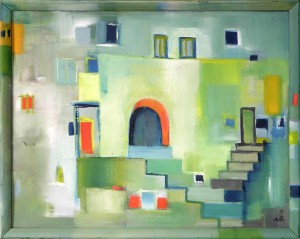
    fwbd3,14 Kleines Bergdorf, Öl auf Karton und Holz, 20 x 30 cm, 2007. Das Bild hat keine eigene Geschichte, nur dass es als Bergdorf beabsichtigt war, in das wahrscheinlich die Vorstellungen eingeflossen sind, wie die Gärten von Kisch ausgesehen haben könnten, weil ich zur Zeit des Malens an den Abenden in einer  Nachdichtung des Gilgamesch Epos las, über die Kindheit des späteren Königs von Uruk, für jugendliche Leser sehr abenteuerlich gestaltet.

    fwbd3,14, A Mountain Village, oil on cardboard and wood, 20 cm by 30 cm, 2007: This painting has no history of its own, I only wanted to paint some mountain village, but probably my imagination of the gardens in Kisch had influenced my painting. At the time I was reading an adaption of the Epic of Gilgamesh in the evenings. The story about the childhood of the later king of Uruk is written in the style of adventure stories for young readers.

    fwbd3,14, Piccolo villaggio di montagna, olio su tela, 20 x 30 cm, 2007. Non c’ è la propria storia di questa pittura, soltanto quella che intendevo un qualsiasi villaggio di montagna in cui si entrava la mia immaginazione dei giardini di Kisch, visto che stavo leggendo un romanzo scritto come derivazione dell’epos su Gilgamesch, un libro sull’infanzia dell’ eroe chi era il re di Uruk, anni più tardi, scritto per i lettori giovani chi amano le storielle avventurose.

  • fwbd3,13, Haus an der Kreuzung, St. Peter Hauptstraße

    fwbd3,13, St. Peter Hauptstraße,

    fwbd3,13, St Peter Hauptstraße, Öl auf Karton, 40 x  50 cm, 1999.

  • fwbd3,12, Haus an der Kreuzung

    fwbd3,12, Haus an der Kreuzung,

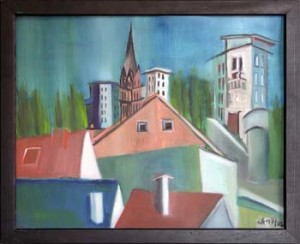
    fwbd3,10, Haus an der Kreuzung, Öl auf Karton, 30 x 40 cm, 2006. Den Rahmen habe ich bewusst in meiner früheren Manier belassen, in Erinnerung an das erste Bild der Serie gleichen Namens. Während ich selber mein Bild in dieser für mich dezenten Art gerahmt hatte, staunte ich nicht wenig, als ich mir das inzwischen an die Arbeiterkammer verkaufte Original für den Vergleich mit dem zu schwach geratenen Druck kurzfristig wieder ausborgen musste. Nach meiner genauen schriftlichen Angabe, wann ich es wieder zurück bringen würde, wurde es mir sehr dick verpackt ausgehändigt, wog so viel, dass ich vom neuen Gewicht in den Knien leicht einknickte. Nicht der Verpackung wegen, der Rahmen war es, wuchtig breit und goldlackiert, als wäre das Bild mit der Zeitmaschine in ein früheres Jahrhundert gereist.

    fwbd3,10, House at the Crossroads, oil on cardboard, 30 cm by 40 cm, 2006. I did not change the frame of this picture as I wanted to keep it in my former style. To my taste it was discreet at least. So I was very astonished when I had to borrow the picture to compare the original and the print, as I had to proof that the print was too pale. The new owner of my picture is a public institution and I had to fill in a form when I would give it back and how the piece of art would be transported. The big packaging they had made for me was rather exaggerated. My knees gave way when the officer handed over the package to me. Unpacking it at the printer’s, I saw that the original frame had been replaced by a broad one, made of gilded wood as if they hat put my picture into a time machine to send it back to an earlier century.

    fwbd3,10, Casa alla crociata, olio su tela, 30 x 40 cm, 2006. La cornice la lasciavo come era già all’inizio per ricordarmi al primo quadro di questa serie. Mentre io avevo scelto la cornice discreta restò stupefatta quando vidi l’originale che i funzionari di un’ ufficio pubblico mi davano in prestito dopo l’aver comprato e munita di una cornice imponente e pesante. L’avevo bisogno per la comparazione della stampa troppo pallida. Mi facevano sottoscrivere una formula col termine delle mia restituzione prima di darmelo con imballatura tanto forte che mi fu piegare i ginocchi prendendolo in mano. Guardando il mio quadro dopo, mi sentivo arrivato in un’altro secolo.

  • fwbd3,11, Milchstandl bei Regen

    fwbd3,11, Milchstandl bei Regen,

    fwbd3,11, Milchstandl bei Regen, Ö auf Karton und Holz, 36 x 48 cm, 1999.

    fwbd3,11, Bancarella, dove si vende il latte, olio su cartone, 36 x 48 cm, 1999.

  • fwbd3,10, Altstadtkonstruktion

    fwbd3,10, Altstadt, verkauft;

    fwbd3,10, Altstadtkonstruktion, Öl auf Karton und Holz, 52 x 62 cm, 1998 und 2009. Kein anderes Bild bisher habe ich so oft verändert wie dieses kleine hier und trotz der vielen Schichten wirkt das Original noch nicht einmal zu dick aufgetragen. Analog dazu habe ich keinen meiner Texte so oft durchgestrichen, von vorne begonnen, gekürzt und weitergeführt bis zur begonnenen Wiederherstellung der ursprünglichen Version, die vor dem ganzen Getue auch schon da war, bis ich zu dem Ergebnis gekommen bin, an manchen Gegebenheiten ändert sich nichts.

    fwbd3,10, Construction of historical buildings, Oil on cardboard and wood, 52 cm by 62 cm, 1998 till 2009. There is no other picture I have changed so often than this small one. Although there are a number of layers of colours it does not seemed too thick.  Analogically, there is no other text that I have reviewed and edited so often just to go back to the original version and to the realize that certain conditions never change.

    fwbd3,10, Centro storico, ricostruito, olio su cartone e legno, 52 x 62 cm, 1998, 2009. Fin’ora non ho cambiato nessun’altro quadro tanto spesso che quello, e ciò nonostante l’originale con molte mani di olio non ha l’effetto troppo abbondante. In analogia non ho cambiato un’altro testo tanto spesso, sempre abbrevviando la versione prossima che mi sembrava  troppo dettagliata ormai, affinché tornavo alla prima versione,  concludendo che la mia prima pittura assomigliava alla situazione passata che anche a grande distanza non si cambierà  più.

  • fwbd3,09, Zentraler Eingang auf Treppenbild

    fwbd3,09, Zentraler Eingang auf Treppenbild,

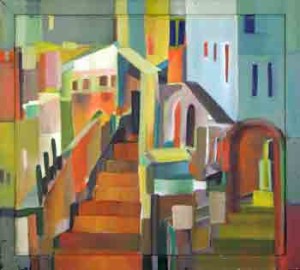
    fwbd3,09, Zentraler Eingang auf Treppenbild, Öl auf Karton und Holz, 40 x 50 cm, 2004. Dieses war das zweite Bild meiner Rahmenbearbeitungen und ich hatte zunächst vor, nur meine Bilder mit Architekturmotiven zu bearbeiten, weil mir dort das mit dem Weiterbauen im eigentlichen Sinn des Wortes naheliegend erschien. Erst seit ich das selber mache, beobachte ich, dass dieser Vorgang vielen Malern vor mir schon eingefallen ist. Auch unter den zeitgenössischen Malern scheint das Einmalen der Rahmen derzeit groß in Mode zu sein. Das Motiv ist ein Burgberg, auf den man über Stiegen hinaufgeht und unterwegs alte verschlossene Eingänge sieht, vielleicht von ehemaligen Stallungen.

    fwbd3,09, Central Entry on Picture With Staircase, oil on cardboard and wood, 40 cm by 50 cm, 2004: This was the second one of my integration of frames. First I intended to work on only those pictures with motifs of architecture. This seemed natural as that would fulfil the common sense of the word “to build on”.  Since I have been including the frames into my pictures, I realise that a number of painters had the same idea long before me. I also notice that it seems to be very fashionable in contemporary art. My motif is a castle hill and stairs leading up to the castle. On both sides of the stairs you can see locked gates which might once have led to the stables.

    fwbd3,09, Ingresso centrale sul dipinto di scale, olio su cartone e legno, 40 x 50 cm, 2004, questo era il secondo dei miei lavori sui cornici. All’ inizio intendevo di cambiare solo quegli con motivi di architettura, siccome lì mi pareva riempito il proprio senso della parola ricostruire. Fin quando cominciavo quel processo mi accorgo dei pittori chi avevano la stessa idea prima. Ma anche nella pittura contemporanea mi sembra moderno di formare le cornici come parte della pittura. Il motivo del quadro è un qualsiasi monte di castello, con scale per andarne su, e con vecchi ingressi chiusi per via, forse stallaggi d’un tempo.

  • fwbd3,08, Bild im Eck

    fwbd3,08, Bild im Eck,

    fwbd3,08, Bild im Eck: Öl auf Karton und Holz, 40 x 50 cm.   Dass ich Malerin sei, treffe sich gut, meinte meine neue Nachbarin, sie brauche dringend Bilder und ob ich vielleicht ein paar hätte, die so zum Wegwerfen in einer Ecke lehnen. Das eigentlich gerade nicht, aber eine Ecke mit Bildern für Spinner hätte ich wohl, dieses zum Beispiel… wollte sie dann aber auch wieder nicht, stattdessen eines, frisch von der Staffelei, das mir auch gerade besonders gelungen erschien. Wobei mir auch dieses besonders gelungen erschien, als es noch frisch auf der Staffelei war. Keines nach gängigen Harmonieprinzipien, weder für Perspektive noch für Komposition, auch nicht für die Farbanordnung könnte in der „öffentlichen Kompetenz“ eine hohe Punkteanzahl erreichen. Allerdings gehört es zu meinen Bildern mit größtmöglichem Zukunftspotenzial, da jeder Betrachter entweder eine abfällige Bemerkung dazu fallen lässt oder eine Frage stellt.

    fwbd3,08, Picture in the Corner, oil on cardboard and wood, 40 cm by 50 cm: My new neighbour was pleased to hear that I was a paintress, as she was in an urgent need of pictures. She wanted to know if, by any chance, I had some, leaning in a corner to be thrown away. I do not have exactly that but there is a corner in my studio with pictures for crazy people, this one for instance… But instead of this one she preferred the new one on my easel which seemed extraordinary also to me. When my picture in the corner had been quite fresh and still on the easel I had also valued it as an extraordinary piece of work. It does not follow the common criteria for harmony,  neither in perspective nor in composition or the combination of the colours and would not get many points if assessed by the public. This picture, however, is among the most promising of my paintings, as every viewer either makes some disparaging comments on it or asks me a question.

    fwbd3,08, Quadro nell’angolo: olio su cartone e legno, 40 x 50 cm. Che io stessi pittore, l’ andrebbe bene, diceva mia vicina nuova, le servirebbero alcuni quadri. Se non ci avessi un’ angolo per caso, a quadri mal riusciti e da buttare via. Questo no, dicevo, ma un’ angolo con quadri dedicati ai matti, per esempio questo, che poi non piaceva neanche a lei. Uno invece che si trovava  sul cavalletto, appena finito e ben riuscitö. Consolidandomi ricordavo che anche quello nell’angolo quand’ era sul cavalletto e appena finito aveva lo stesso valore a me. Le regole dell’ armonia non se ne riempirono, ne in prospettiva, ne in  composizione e neanche nell’insieme dei colori. “La competenza pubblica” mi darebbe un voto male. Appartiene tuttavia ai miei quadri con grande futuro, siccome ognuno chi lo guarda lo commenta. O mi danno un giudizio sfavorevole  o mi chiedono,  che cosa vuol dire questo quadro?

  • fwbd3,07, Goldene Pastete

    fwbd3,07, Goldene Pastete,

    fwbd3,07, Goldene Pastete, 33 x 43 cm, 2003. Dieses war eines der ersten Bild meiner Rahmenbearbeitungen und ich hatte zunächst vor, nur meine Bilder mit Architekturmotiven zu bearbeiten, weil mir dort das mit dem Weiterbauen im eigentlichen Sinn des Wortes naheliegend erschien. Erst seit ich das selber mache, beobachte ich, dass dieser Vorgang vielen Malern vor mir schon eingefallen ist. Auch unter den zeitgenössischen Malern scheint das Einmalen der Rahmen derzeit groß in Mode zu sein.

    fwbd3,07  oil on cardboard and wood, 230 cm by 33 cm, 2004. This was one of the first of  my integration of frames. First I intended to work on only those pictures with motifs of architecture. This seemed natural as that would fulfil the common sense of the word “to build on”.  Since I have been including the frames into my pictures, I realise that a number of painters had the same idea long before me. I also notice that it seems to be very fashionable in contemporary art.